
Get ready, adventure seekers and fellow cruise enthusiasts! You’ve booked your Alaska cruise, packed your bags (hopefully with some awesome Alaska Cruise Tees!), and are dreaming of glaciers, majestic scenery, and, of course, incredible wildlife. One of the absolute highlights of any journey through the Last Frontier is the chance to witness magnificent whales in their natural habitat. But with so many incredible creatures swimming around, how do you tell them apart?
Fear not, future whale whisperers! We’re here to give you the ultimate guide to alaska cruise whale species identification. Prepare to impress your fellow passengers (and maybe even a seasoned naturalist or two) with your newfound knowledge of the majestic marine mammals you’ll encounter. From massive humpbacks putting on a show to sleek orcas hunting in pods, knowing what to look for will make your whale-watching experience even more magical. Let’s dive in!
Humpback Whales: Flukes, Breaching Patterns, and Bubble-Net Feeding
Ah, the humpback whale! These gentle giants are arguably the rockstars of the Alaska cruise scene, known for their dramatic antics and often being the most frequently spotted types of whales alaska cruise offers. They are truly magnificent, measuring up to 50 feet long and weighing around 40 tons. Spotting one of these colossal creatures is an unforgettable experience, and with a few tips, you'll be able to identify them with ease.
The Iconic Flukes: Nature's Fingerprints
The most distinctive feature for identify whales alaska, especially humpbacks, is their tail fluke. When a humpback prepares for a deep dive, it often lifts its massive, broad tail high out of the water, revealing the underside. Each fluke has a unique pattern of black and white pigmentation, as individual as a human fingerprint. Marine biologists use these patterns to identify individual whales for research, so if you get a good photo, you might even be contributing to science!
Beyond the unique patterns, notice the serrated trailing edge of the fluke – another characteristic identifier. The sheer size and distinct shape of the humpback's fluke are usually enough to distinguish it from any other whale species inside passage.
Breaching: The Ultimate Spectacle
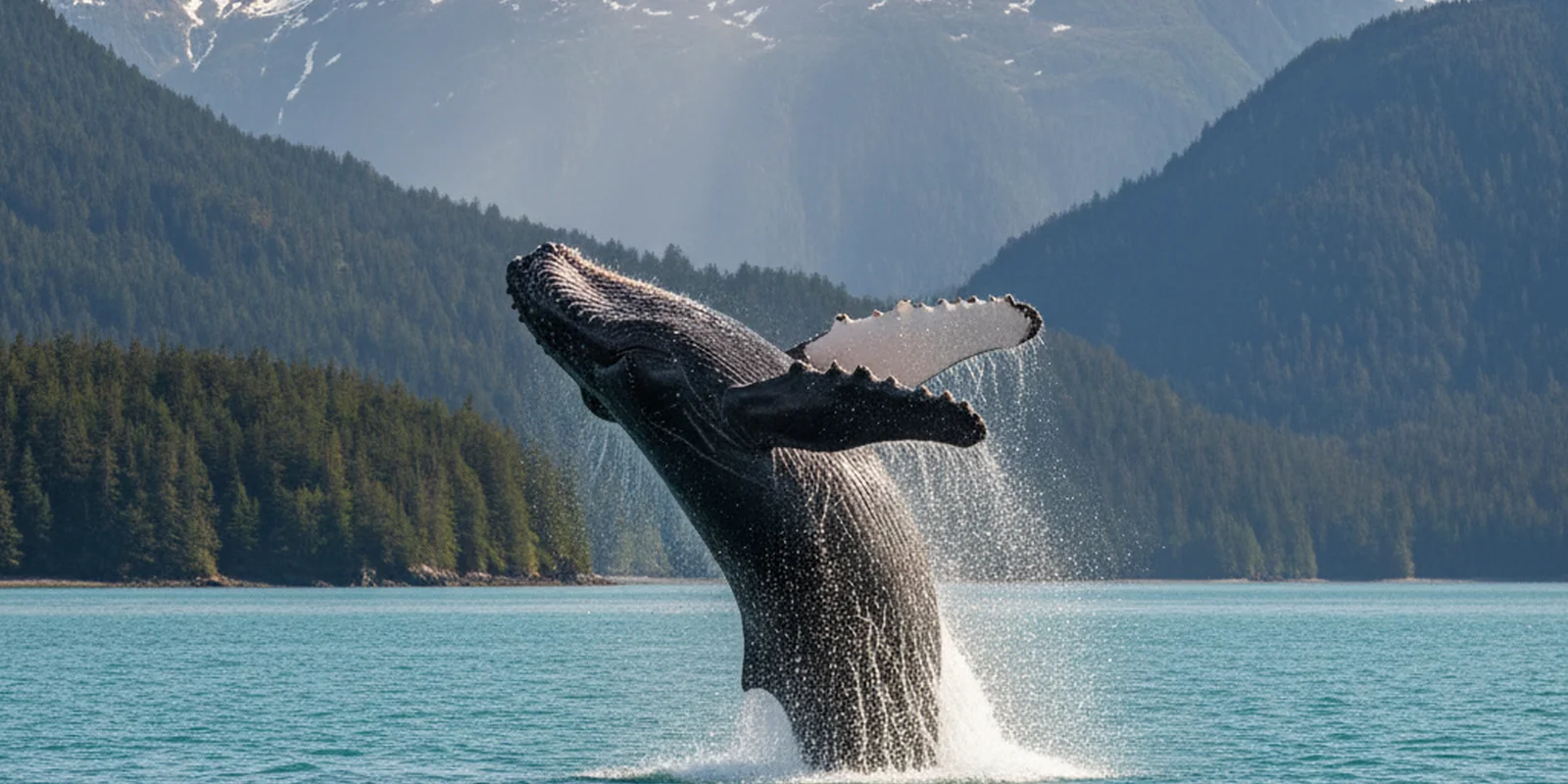
Ever seen a whale launch its entire body out of the water? That, my friends, is breaching, and humpbacks are absolute masters of it! While scientists aren't entirely sure why they do it, theories range from communication and removing parasites to simply showing off or playing. Whatever the reason, witnessing a humpback whale breach is an awe-inspiring moment that often elicits gasps and cheers from everyone on deck. Look for that massive splash and the sheer scale of the whale as it momentarily defies gravity.
Beyond full breaches, humpbacks also engage in other surface behaviors like "pec slapping" (slapping their long pectoral fins on the water) and "tail slapping" or "lobtailing" (repeatedly slapping their fluke on the surface). These actions create impressive splashes and are often signs of active, social whales.
Bubble-Net Feeding: A Cooperative Culinary Masterpiece
One of the most incredible and unique behaviors you might witness from humpbacks in Alaska is bubble-net feeding. This cooperative hunting strategy is a true marvel of nature. A group of humpbacks (sometimes a dozen or more!) will work together to create a "net" of bubbles around a school of fish, driving them to the surface. One whale typically blows bubbles in a circular pattern, while others vocalize to herd the fish, and then, in a synchronized rush, they all surface with their mouths open, scooping up hundreds of fish.
Look for a circular pattern of bubbles on the surface, followed by multiple whales surfacing simultaneously with their massive mouths agape. This is an incredible display of intelligence and teamwork, and it's a behavior most commonly observed in the rich feeding grounds of Alaska. If you see this, consider yourself incredibly lucky – it's a true bucket-list moment!
Orcas: Resident vs. Transient Pods and How to Tell Them Apart
Next up, the magnificent orca, often called the "killer whale" – though that name doesn't quite capture their complex social structures and incredible intelligence. These sleek, powerful predators are easily recognizable by their striking black and white coloration and tall dorsal fins. But did you know there are different types of orcas in Alaska, and their lifestyles are as different as night and day?
The Tale of Two Orca Types: Residents vs. Transients
In Alaska, the primary alaska cruise whale species identification challenge for orcas lies in distinguishing between "resident" and "transient" (also known as Biggs) killer whales. While they look similar at first glance, their diets, behaviors, and social structures are vastly different.
Resident Orcas:
- Diet: Primarily fish-eaters, with salmon being a favorite.
- Social Structure: Live in large, stable family groups called pods, often numbering 10-50 individuals. These pods stay together for life, maintaining strong matriarchal bonds.
- Behavior: Tend to be more vocal, using echolocation to find fish. They are often seen in predictable patterns, foraging in specific areas.
- Dorsal Fin: Typically more rounded or blunt at the tip, and sometimes have nicks or scars. The saddle patch (the gray area behind the dorsal fin) is often open, meaning it has black "fingers" extending into it.
Transient (Biggs) Orcas:
- Diet: Marine mammal hunters! Their menu includes seals, sea lions, porpoises, and even other whales.
- Social Structure: Travel in smaller, more fluid groups, usually 2-6 individuals. They are stealth hunters, often moving silently to ambush prey.
- Behavior: Less vocal than residents to avoid alerting their prey. Their hunting strategies are incredibly sophisticated and coordinated.
- Dorsal Fin: Often more pointed or triangular at the tip. The saddle patch is typically closed, meaning it is a solid gray patch without black intrusions.
When you spot an orca, pay close attention to the shape of its dorsal fin and the saddle patch, and observe their behavior. Are they quietly stalking, or are they actively foraging with lots of surface activity? This will help you determine which type of majestic hunter you're witnessing. It's truly fascinating to observe these distinct whale species inside passage.
Gray Whales: Migration Timing and Where to Spot Them
Gray whales are another incredible species you might encounter during your Alaska cruise, especially if your itinerary takes you to certain areas or during specific times of the year. These ancient mariners are known for their epic migrations, traveling thousands of miles each year between their breeding grounds in Baja California and their rich feeding grounds in the Arctic.
The Great Migration and Appearance
While humpbacks and orcas are more common throughout the Inside Passage, gray whales are often sighted in areas closer to the open ocean, such as the Gulf of Alaska, or specific feeding grounds like those near Kodiak Island or the Aleutian Islands. Their migration north typically occurs in spring, with the southbound journey in late fall/early winter. So, if you're cruising in early summer, you might catch the tail end of their northern migration.
For alaska cruise whale species identification, gray whales are quite distinct. They are large, growing up to 49 feet long, but their most striking feature is their mottled, grayish skin, often covered in barnacles and whale lice, giving them a patchy, encrusted appearance. This makes them look rugged and ancient, like living geological formations.
Unlike humpbacks, gray whales lack a dorsal fin. Instead, they have a series of knobby bumps or "knuckles" running down their lower back toward the fluke. When they surface, you'll often see their distinctive heart-shaped blow, which is bushy and often low to the water.
Bottom Feeders Extraordinaire
Gray whales are unique among baleen whales for their bottom-feeding habits. They typically roll onto their sides and scoop up mouthfuls of sediment from the ocean floor, filtering out tiny crustaceans, amphipods, and other invertebrates. This behavior can sometimes be observed as they create muddy plumes in the water, a tell-tale sign of a feeding gray whale.
Keep your eyes peeled for their unique blow and those distinctive knobby backs. Spotting a gray whale is a special treat, a testament to the incredible journey these resilient creatures undertake annually. For more incredible wildlife encounters, don't forget to check out our Alaska Wildlife You'll See on a Cruise: Photo Guide!
Minke Whales and Dall's Porpoises: The Smaller Sightings
While humpbacks and orcas often steal the show with their dramatic displays, don't overlook the smaller, but equally fascinating, marine mammals that call Alaska home. Minke whales and Dall's porpoises are frequently seen and add another layer of excitement to your alaska cruise whale species identification efforts.
Minke Whales: The Elusive Sprinters
Minke whales are the smallest of the "great whales" found in Alaska, typically growing up to 30 feet long. They are known for being a bit elusive and fast, making them harder to photograph than their larger cousins. However, they are quite common and can be spotted throughout the Inside Passage and Gulf of Alaska.
To identify whales alaska, especially minkes, look for their sleek, dark gray body with a pointed snout. A key distinguishing feature is a prominent white band on each flipper, which is often visible as they surface. They have a small, curved dorsal fin located far back on their body. Their blow is usually small and indistinct, often just a misty puff that's hard to see.
Minkes are often seen alone or in small groups, feeding on schooling fish and krill. They tend to surface irregularly and quickly, so you need to be quick with your binoculars! Their speed and tendency to make quick, unpredictable movements make them a fun challenge to spot and identify.
Dall's Porpoises: The Speed Demons of the Sea
Okay, so technically, Dall's porpoises aren't whales, but they are frequently mistaken for smaller orcas due to their similar black and white coloration and are a common sight on Alaska cruises. These energetic little marine mammals are the fastest porpoises in the world, capable of speeds up to 34 miles per hour!
Their distinctive appearance makes alaska cruise whale species identification of Dall's porpoises relatively straightforward. They have a stout body, mostly black with a large white patch on their flanks and belly. Their dorsal fin is triangular and often has a white or frosted tip, similar to a mini-orca fin. When they surface, they create a characteristic "rooster tail" splash as they rapidly swim just below the surface.
Dall's porpoises love to bow-ride, so you might see them playing in the wake of your cruise ship or smaller excursion boats. They are incredibly active and playful, often seen in groups, zipping through the water. While not whales, they are definitely a delightful addition to your wildlife spotting list!
Quick-Reference Identification Chart for Printing
To help you keep all this amazing information straight during your Alaska adventure, here’s a handy quick-reference guide. Print this out, keep it near your binoculars, and become the ultimate whale spotter on your cruise!
- Humpback Whales:
- Size: Up to 50 feet.
- Key Features: Large, knobby head; long pectoral fins (up to 1/3 body length); unique black and white patterns on tail flukes.
- Behaviors: Frequent breaching, tail slapping, pec slapping, famous bubble-net feeding. Fluke often shown before a deep dive.
- Blow: Bushy, columnar, up to 10-13 feet high.
- Orcas (Killer Whales):
- Size: Up to 30 feet.
- Key Features: Distinctive black and white coloration; tall, triangular dorsal fin.
- Resident Orcas: Rounded/blunt dorsal fin tip, open saddle patch (black intrusions), fish-eaters, vocal, large stable pods.
- Transient (Biggs) Orcas: Pointed/triangular dorsal fin tip, closed saddle patch (solid gray), marine mammal hunters, stealthy, smaller fluid groups.
- Blow: Bushy, up to 10-12 feet high.
- Gray Whales:
- Size: Up to 49 feet.
- Key Features: Mottled gray skin often covered in barnacles; no dorsal fin, but a series of knobby bumps along the lower back; broad, paddle-shaped flukes.
- Behaviors: Slow, deliberate movements; bottom-feeding (creating muddy plumes); often seen close to shore during migration.
- Blow: Heart-shaped or V-shaped, low and bushy, up to 10 feet high.
- Minke Whales:
- Size: Up to 30 feet.
- Key Features: Sleek, dark gray body; pointed snout; prominent white band on each flipper; small, curved dorsal fin far back on body.
- Behaviors: Fast, elusive, irregular surfacing; often solitary.
- Blow: Small, indistinct mist.
- Dall's Porpoises:
- Size: Up to 7 feet.
- Key Features: Stout body, black with large white patches on flanks/belly; small, triangular dorsal fin with white tip.
- Behaviors: Very fast; creates a distinctive "rooster tail" splash; often bow-rides ships; playful and active.
- Blow: Very small, barely visible.
There you have it, future marine biologists and Alaska adventurers! Your cruise through the pristine waters of Alaska is going to be an experience filled with wonder, and now you’re equipped to truly appreciate the incredible diversity of marine life. Knowing the key features for alaska cruise whale species identification will transform your wildlife sightings from mere glimpses into informed, exciting discoveries.
So grab your binoculars, wear your comfiest (and perhaps funniest!) Alaska cruise shirt, and get ready to create memories that will last a lifetime. Every splash, every fluke, every distant blow tells a story, and now you're ready to read them all. And while you’re scanning the horizon for whales, don't forget to look up – you might just spot an eagle! For tips on that, check out our guide on Bald Eagle Watching at Alaska Cruise Ports: Where to Look.
Happy whale watching, and may your Alaska cruise be filled with unforgettable wildlife encounters!
Ready to Shop?
Browse our collection — Fun, colorful Alaska cruise apparel for your next adventure.
Shop All Shirts
Published by Alaska Cruise Tees
Fun, colorful Alaska cruise apparel for your next adventure
Frequently Asked Questions
What are the most common whale species seen on an Alaska cruise?
The most commonly sighted whale species on an Alaska cruise are humpback whales and orcas (killer whales). You also have a good chance of spotting Minke whales and Dall's porpoises, with gray whales appearing in specific areas or times of year.
How can I tell the difference between resident and transient orcas?
Resident orcas primarily eat fish, live in large stable pods, and have more rounded dorsal fins with "open" saddle patches. Transient (Biggs) orcas hunt marine mammals, travel in smaller, fluid groups, and typically have more pointed dorsal fins with "closed" (solid gray) saddle patches. Observing their behavior – stealthy hunting vs. vocal foraging – also provides clues.
What is bubble-net feeding and which whale species does it?
Bubble-net feeding is a unique cooperative hunting strategy where a group of humpback whales work together to blow a "net" of bubbles around a school of fish, driving them to the surface. They then surface simultaneously with open mouths to feed. This incredible behavior is most commonly observed in humpback whales in Alaska.
Are gray whales common in the Inside Passage during an Alaska cruise?
While gray whales are magnificent, they are less commonly seen directly within the sheltered Inside Passage compared to humpbacks and orcas. They are more frequently sighted in areas closer to the open ocean, like the Gulf of Alaska, especially during their spring migration north to Arctic feeding grounds.
What's the best way to spot whales from my cruise ship?
To maximize your chances of spotting whales, spend time on the outer decks, especially during daylight hours in active wildlife areas. Bring a good pair of binoculars, scan the horizon for blows (spouts of water), and look for surface activity like breaches or tail slaps. Attending naturalist talks can also provide valuable insights into where and when to look.
First Look at New Alaska Cruise Designs
Get new alaska cruise shirts, packing tips, and port-day style guides delivered straight to your inbox — before anyone else sees them.