
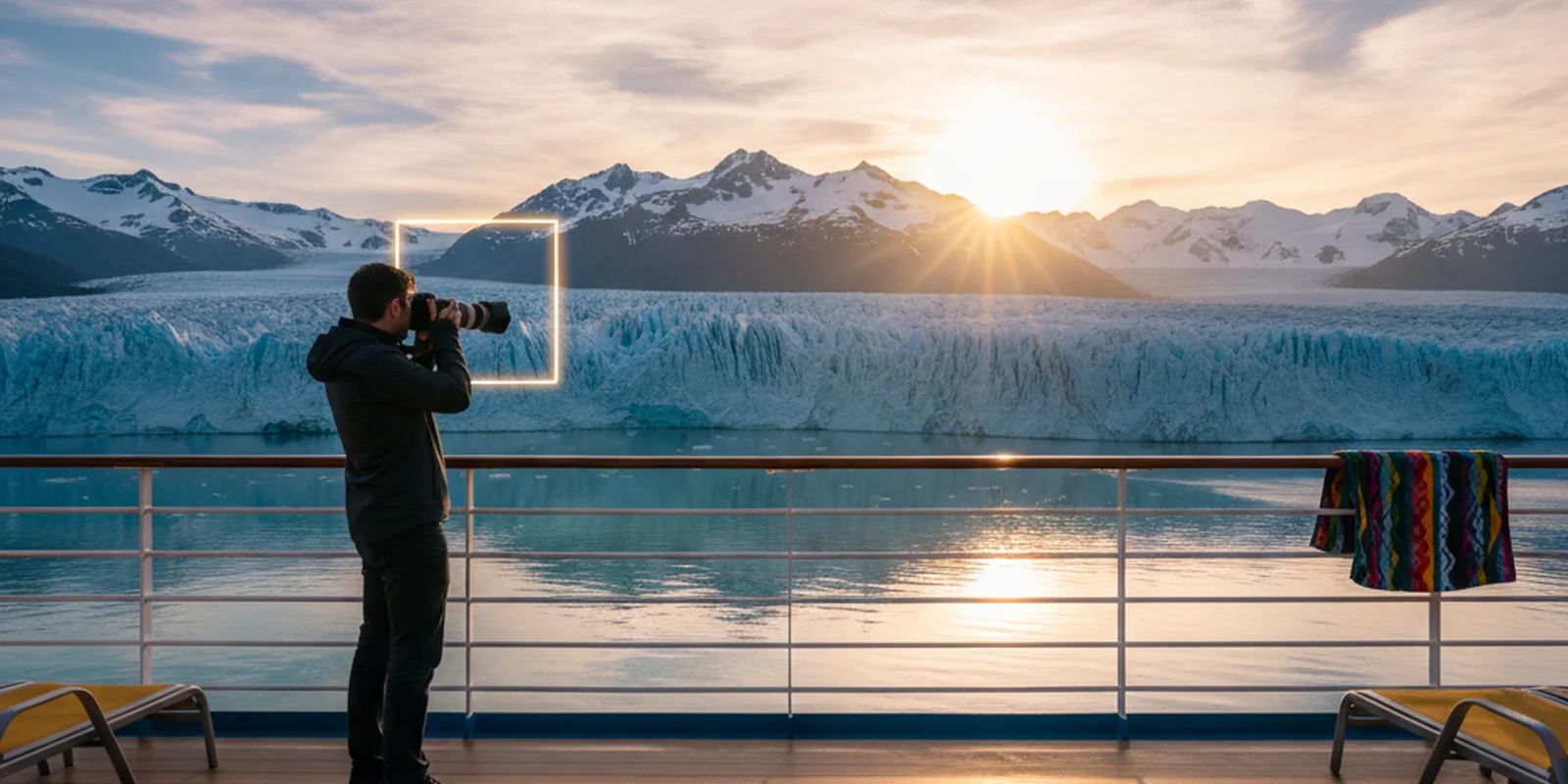
Alright, future photo phenoms! You’ve booked your Alaska cruise, picked out your snazzy Alaska Cruise Tees, and now you’re dreaming of those epic shots. Well, buckle up, because we’re about to unlock all the best Alaska cruise photography tips for beginners, ensuring your memories are as breathtaking as the scenery itself. Forget blurry whales and washed-out glaciers; we’re here to help you capture every shimmering moment like a pro, even if your camera knowledge mostly extends to "point and shoot." Think of us as your friendly onboard photo guide, ready to share the secrets to turning your cruise album into a masterpiece. Get ready to snap, share, and relive the magic of the Last Frontier through your lens!
An Alaska cruise is a visual feast, from towering glaciers to playful wildlife and charming port towns. To truly do it justice, a little photography know-how goes a long way. We’ll cover everything from camera settings to composition, making sure your vacation photos are as vibrant and unforgettable as the journey itself. Let’s dive into how to make your camera (or phone!) sing in this incredible landscape.
Best Camera and Phone Settings for Glacier Blue Tones
Those electric blues of an Alaskan glacier are mesmerizing, aren’t they? They’re also notoriously tricky to capture without looking like a bland white lump. But don't you worry, with these key glacier photography tips, you'll be nailing those icy masterpieces in no time. The secret lies in understanding how your camera sees light and color, especially when surrounded by so much white and blue.
White Balance is Your Best Friend
First up, white balance. Your camera tries to make white objects look white, but in a glacial environment, this can often mute those incredible blues. If you’re shooting with a DSLR or mirrorless camera, try setting your white balance manually. Options like "Cloudy" or "Shade" can often bring out cooler tones, enhancing the blues without making everything look unnatural. Experiment a bit to see what works best for your specific scene.
For smartphone users, many modern phone cameras have a "Pro" or "Manual" mode that allows you to adjust white balance. If not, don’t stress! You can often achieve similar effects in editing apps by adjusting the "Temperature" or "Tint" sliders later. Just remember that it’s easier to cool down a slightly warm photo than to bring back lost blue tones from an overly warm one.
Exposure Compensation and Dynamic Range
Glaciers are bright, and your camera might try to underexpose the scene, leaving your blues looking murky. Use exposure compensation (the +/- button on your camera) to slightly overexpose by about +0.3 to +0.7 stops. This helps ensure the glacier's details aren't lost in shadow and allows those blues to pop. Be careful not to overexpose too much, or you'll blow out the highlights, losing all detail in the brightest whites.
If your camera allows it, shoot in RAW format. This captures much more data than a standard JPEG, giving you far greater flexibility to recover details in highlights and shadows during post-processing. It’s like having a digital safety net for those tricky lighting conditions. For phone photographers, look for apps that allow RAW capture, or simply focus on getting the exposure as close to perfect as possible in-camera.
Composition for Grandeur
When composing your glacier shots, don't just point and click. Think about scale! Include a tiny cruise ship or a person on deck in the frame to emphasize the sheer enormousness of these ice giants. Look for reflections in the water, which can double the visual impact. And remember, the sky above a glacier can be just as dramatic, so don't be afraid to include a generous portion of it in your shot. A good rule of thumb for these vast landscapes is to consider the rule of thirds, placing your horizon on one of the horizontal lines, not dead center.
How to Photograph Wildlife from a Moving Ship
One of the absolute thrills of an alaska wildlife photography cruise is spotting whales breaching, eagles soaring, or seals lounging on ice floes. But capturing these fleeting moments from a constantly moving ship? That's a whole different ballgame! Don't let the motion of the ocean deter you; with a few smart techniques, you’ll be ready to snag those incredible shots.
Speed is Your Friend: Shutter Priority and Continuous Shooting
When it comes to wildlife, speed is king. You need a fast shutter speed to freeze motion, especially when your subject (and your platform!) is moving. Aim for at least 1/1000th of a second for birds in flight or breaching whales. If you have a DSLR or mirrorless, set your camera to Shutter Priority (Tv or S mode) and dial in a high shutter speed. Your camera will then adjust the aperture for you.
Engage your camera's continuous shooting mode (often called "burst mode"). This lets you take multiple photos in rapid succession with a single press of the shutter button. Wildlife moments are often blink-and-you-miss-it, so a burst of shots dramatically increases your chances of getting "the one." For phone users, simply hold down the shutter button to activate burst mode.
Focusing on the Fly
Autofocus settings are crucial for cruise ship photography Alaska when wildlife is involved. If your camera has AI Servo (Canon) or AF-C (Nikon/Sony) mode, use it. This continuous autofocus mode will track a moving subject as long as you keep the shutter button half-pressed. For static subjects like seals on ice, single-shot autofocus (AF-S or One-Shot) is fine.
Pre-focusing can also be a lifesaver. If you see a whale spout in the distance, focus on the water where you expect it to resurface. Then, when it appears, you’re already mostly focused and just need a quick adjustment. Patience is also key here; sometimes the best shot comes after waiting for a few minutes for the animal to reveal itself fully.
Stability and Anticipation
Even though the ship is moving, you can minimize your own movement. Lean against the ship's railing or a solid bulkhead to steady yourself. Use both hands to hold your camera firmly. If you have a telephoto lens, this stability becomes even more critical. Keep an eye out for patterns in wildlife behavior. Whales often breach multiple times or surface predictably. Anticipating where and when they might appear next can give you that crucial second to prepare your shot.
Don't forget to look around! While everyone else is looking left, a majestic eagle might fly past on the right. An alaska wildlife photography cruise is all about keeping your eyes peeled in every direction. And remember, sometimes the most charming wildlife shots are the ones of smaller creatures, like puffins or sea otters, closer to the ship.
Golden Hour Timing in Alaska — It Lasts for Hours in Summer
Ah, the golden hour! That magical time just after sunrise and just before sunset when the light turns soft, warm, and utterly dreamy. In most places, it’s a fleeting moment, but in Alaska during the summer, it's like Mother Nature decided to hit the "extended play" button. This unique phenomenon offers incredible opportunities for your Alaska cruise photography tips, transforming ordinary scenes into extraordinary ones.
The Alaskan Golden Hour Phenomenon
Because of Alaska's high latitude, the sun doesn't rise and set at the steep angles it does closer to the equator. Instead, it skims the horizon for much longer, prolonging both sunrise and sunset. This means you can enjoy hours of that coveted golden light, perfect for capturing stunning landscapes, dramatic skies, and beautifully lit portraits on deck. Imagine the glow on those snow-capped peaks!
To really maximize these opportunities, it's a good idea to know when to expect these extended periods of light. For the best viewing spots and timing tips, you absolutely have to check out our article on Alaska Cruise Sunset and Sunrise: Best Viewing Spots. It’s packed with insights to help you plan your photographic adventures around the sun’s schedule.
Making the Most of the Light
During the golden hour, everything takes on a beautiful, warm hue. This light is incredibly flattering for people, so it's a fantastic time for group photos in your matching Alaska Cruise Tees! It also adds depth and dimension to landscapes, making mountains and forests glow. Try shooting with the sun behind your subject for a beautiful rim light effect, or let the low-angled light rake across textures, bringing out details in glaciers or rugged coastlines.
Don't pack away your camera just because the sun dips below the horizon. The "blue hour" immediately following sunset (or preceding sunrise) offers another unique photographic opportunity. The sky turns a deep, rich blue, contrasting beautifully with artificial lights from towns or your cruise ship. It’s perfect for atmospheric shots, so keep your camera handy!
Composition Tips for Port Towns and Mountain Backdrops
Beyond the glaciers and wildlife, Alaska's charming port towns and majestic mountain backdrops provide endless photographic inspiration. From the colorful storefronts of Ketchikan to the towering peaks surrounding Juneau, there’s beauty everywhere. Applying some fundamental composition techniques will elevate your photos from simple snapshots to captivating visual stories.
The Rule of Thirds is Your Compass
This is perhaps the most fundamental composition rule, and it’s a game-changer. Imagine dividing your image into nine equal sections with two horizontal and two vertical lines. Instead of placing your main subject directly in the center, try positioning it along these lines or at their intersections. This creates a more dynamic and visually interesting image. For example, when photographing a totem pole in Ketchikan, place it on one of the vertical lines rather than dead center.
Leading Lines and Framing
Look for leading lines to draw the viewer's eye into your photograph. These could be winding roads, ship railings, or even the natural lines of a mountain range. Use them to guide the eye towards your main subject. Framing is another powerful tool; use natural elements like tree branches, doorways, or even the ship's windows to create a "frame" around your subject, adding depth and context. Imagine framing a distant mountain peak through the rigging of a historic ship in Skagway!
Capturing Scale and Story
Alaska's landscapes are immense, and conveying that scale is key. Include recognizable elements like people, buildings, or even your cruise ship in the frame to give a sense of just how grand everything is. A tiny person standing against a vast mountain range tells a story of human wonder in the face of nature's majesty. When photographing port towns, don't just shoot the main street. Look for unique details, local characters, or colorful fishing boats that tell a deeper story about the place.
Think about foreground, middle ground, and background. A photo with interesting elements at different depths feels more immersive. For instance, a close-up of wildflowers in the foreground, a charming building in the middle ground, and a snow-capped mountain in the background creates a rich, layered image. Don't be afraid to get low or high for different perspectives; sometimes a slight change in angle can completely transform a shot.
Editing Apps and Quick Fixes for Cruise Photos
So you’ve captured some incredible moments with our Alaska cruise photography tips – fantastic! But let’s be real, even the best photos can benefit from a little polish. Think of editing as the final sprinkle of fairy dust on your vacation memories. You don’t need to be a Photoshop wizard; a few simple tweaks in a user-friendly app can make a world of difference.
Your Go-To Editing Toolkit
For smartphone users, there's a fantastic array of apps available that can elevate your photos with just a few taps. Some of our favorites include:
- Adobe Lightroom Mobile: Powerful and versatile, offering both basic and advanced adjustments. You can even sync with desktop Lightroom if you're feeling fancy.
- Snapseed: A free Google app that's incredibly intuitive with a wide range of tools, from selective adjustments to healing brushes.
- VSCO: Known for its beautiful film-like filters, but also offers solid basic editing tools.
- Your Phone's Built-in Editor: Don't underestimate it! Most modern phone photo apps have surprisingly robust editing features for quick fixes.
For camera users, if you shot in RAW, a desktop program like Adobe Lightroom Classic or Capture One will give you the most control. However, for quick shares, transferring to your phone and using one of the above apps works wonders.
Quick Fixes for Common Cruise Photo Woes
Here are some essential adjustments that can quickly transform your photos:
- Brightness & Contrast: The most basic but often most impactful adjustments. Brighten underexposed shots and add a little contrast to make colors pop. Be gentle; too much can make photos look artificial.
- Highlights & Shadows: These are lifesavers for tricky lighting. Reduce highlights to bring back detail in bright skies or glaciers, and lift shadows to reveal details in darker areas without making the whole image too bright.
- Saturation & Vibrance: Saturation boosts all colors equally, which can sometimes look overdone. Vibrance is often a better choice as it selectively enhances less saturated colors, giving a more natural pop. Use it to make those blues of the water or the greens of the forests really sing!
- White Balance/Temperature: As we discussed for glaciers, adjusting the temperature can correct color casts. Make a photo warmer (more yellow/orange) or cooler (more blue) to match the mood or correct for inaccurate lighting.
- Cropping & Straightening: A slightly crooked horizon can ruin an otherwise great shot. Use the straighten tool! Cropping can dramatically improve composition, removing distracting elements and focusing the viewer's eye on your subject. Don't be afraid to crop tightly for impact.
- Sharpening: A subtle touch of sharpening can make details crisper, but use sparingly. Too much sharpening can introduce noise or a grainy look.
Remember, the goal isn't to make your photos look fake, but to enhance what was already there and bring them closer to how you remember the scene. A little goes a long way!
Embark on Your Photographic Journey
There you have it, fellow adventurers! With these alaska cruise photography tips, you’re now armed with the knowledge to capture the sheer majesty and fun of your Alaskan voyage. From the dazzling blues of the glaciers to the elusive wildlife and charming port towns, every moment is a photo opportunity waiting to happen. Don't forget to practice before you go, and most importantly, have fun with it!
Remember, the best camera is the one you have with you, so whether it's a top-tier DSLR or your trusty smartphone, you can create stunning memories. And while you're getting ready for your adventure, make sure you've got all the practicalities sorted. If you're sailing from the Emerald City, you might find our guide on Alaska Cruise Embarkation Day Tips: Seattle Departure super helpful for a smooth start to your trip. Now go forth, explore, and snap away!
Ready to Shop?
Browse our collection — Fun, colorful Alaska cruise apparel for your next adventure.
Shop All Shirts
Published by Alaska Cruise Tees
Fun, colorful Alaska cruise apparel for your next adventure
Frequently Asked Questions
What camera settings are best for capturing the blue color of glaciers?
To enhance glacier blues, try adjusting your white balance to "Cloudy" or "Shade" mode. Also, consider slightly overexposing your shot by +0.3 to +0.7 stops using exposure compensation, as glaciers are very bright. Shooting in RAW format will give you more flexibility to recover details and adjust colors in post-processing.
How can I get clear photos of wildlife from a moving cruise ship?
Use a fast shutter speed (1/1000th second or faster) to freeze motion and engage continuous shooting mode to capture bursts of action. Utilize continuous autofocus (AI Servo/AF-C) to track moving subjects. Leaning against a stable surface like the ship's railing can also help minimize camera shake.
What is the "golden hour" in Alaska and how long does it last?
The golden hour is the period of soft, warm, directional light just after sunrise and before sunset. Due to Alaska's high latitude, the sun skims the horizon at a shallower angle, extending this magical light for several hours during the summer months, offering prolonged opportunities for stunning photography.
What are some easy editing tips for cruise photos on my phone?
Use apps like Lightroom Mobile or Snapseed for quick fixes. Focus on adjusting brightness, contrast, highlights, and shadows to bring out details. Boost vibrance (rather than saturation) to make colors pop naturally, and don't forget to crop and straighten your horizons for improved composition.
First Look at New Alaska Cruise Designs
Get new alaska cruise shirts, packing tips, and port-day style guides delivered straight to your inbox — before anyone else sees them.